Places of Interest
The UK has a large network of public footpaths in the countryside. There are also many opportunities for mountain biking, mountaineering and hill walking. There are 15 national parks in England, Wales and Scotland. They are areas of protected countryside that everyone can visit, and where people live, work and look after the landscape.
There are many museums in the UK, which range from small community museums to large national and civic collections. Famous landmarks exist in towns, cities and the countryside throughout the UK. Most of them are open to the public to view (generally for a charge).
Many parts of the countryside and places of interest are kept open by the National Trust in England, Wales and Northern Ireland and the National Trust for Scotland. Both are charities that work to preserve important buildings, coastline and countryside in the UK. The National Trust was founded in 1895 by three volunteers. There are now more than 61,000 volunteers helping to keep the organisation running.
UK World Heritage Sites
The UK has numerous UNESCO World Heritage Sites, recognising places of outstanding universal value. These include:
- Stonehenge and Avebury in Wiltshire -- prehistoric stone circles dating back thousands of years
- The Tower of London -- a historic castle and former royal palace on the north bank of the Thames
- Bath -- famous for its Roman-built baths and Georgian architecture
- Edinburgh Old and New Towns -- the historic and Georgian areas of Scotland's capital
- Giant's Causeway -- a natural volcanic rock formation in Northern Ireland
- Blaenavon Industrial Landscape in Wales -- evidence of the area's role in the Industrial Revolution
- Canterbury Cathedral -- one of the oldest and most famous Christian structures in England
- Maritime Greenwich -- home of the Prime Meridian (longitude 0 degrees) and the Royal Observatory
Landmarks in England
Big Ben is the nickname for the great bell of the clock at the Houses of Parliament in London. Many people call the clock Big Ben as well. The clock is over 150 years old and is a popular tourist attraction. The clock tower is named 'Elizabeth Tower' in honour of Queen Elizabeth II's Diamond Jubilee in 2012.
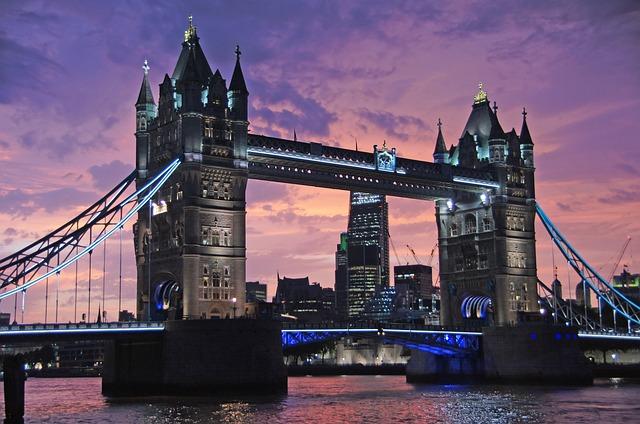
The Tower of London was first built by William the Conqueror after he became king in 1066. Tours are given by the Yeoman Warders, also known as Beefeaters, who tell visitors about the building's history. People can also see the Crown Jewels there.
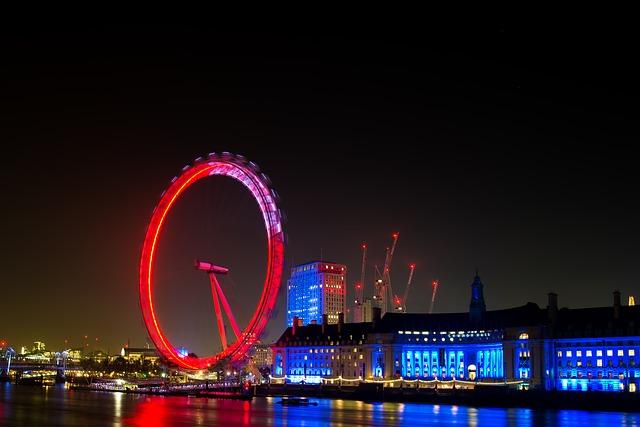
The London Eye is situated on the southern bank of the River Thames and is a Ferris wheel that is 443 feet (135 metres) tall. It was originally built as part of the UK's celebration of the new millennium and continues to be an important part of New Year celebrations.
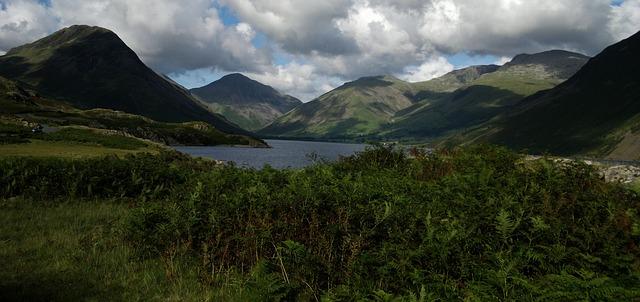
The Lake District is England's largest national park. It covers 885 square miles (2,292 square kilometres). It is famous for its lakes and mountains and is very popular with climbers, walkers and sailors. The biggest stretch of water is Windermere. In 2007, television viewers voted Wastwater as Britain's favourite view.
The Eden Project is located in Cornwall, in the south west of England. Its biomes, which are like giant greenhouses, house plants from all over the world. The Eden Project is also a charity which runs environmental and social projects internationally.
Landmarks in Scotland
Edinburgh Castle is a dominant feature of the skyline in Edinburgh, Scotland. It has a long history, dating back to the early Middle Ages. It is looked after by Historic Scotland, a Scottish government agency.
Loch Lomond and the Trossachs National Park covers 720 square miles (1,865 square kilometres) in the west of Scotland. Loch Lomond is the largest expanse of fresh water in mainland Britain and probably the best-known part of the park.
The Royal Mile in Edinburgh connects Edinburgh Castle to the Palace of Holyroodhouse and is a famous tourist destination. St Andrews in Scotland is known as the home of golf.
The Cairngorms National Park is the largest national park in the UK, covering an area of 1,748 square miles (4,528 square kilometres) in the Scottish Highlands.
Landmarks in Wales
Snowdonia is a national park in North Wales. It covers an area of 838 square miles (2,170 square kilometres). Its most well-known landmark is Snowdon, which is the highest mountain in Wales.
Conwy Castle and Caernarfon Castle are examples of the medieval castles built by Edward I to consolidate his conquest of Wales. They are part of the Castles and Town Walls of King Edward in Gwynedd World Heritage Site.
The Brecon Beacons (now known as Bannau Brycheiniog) is a national park in south Wales, popular for walking, horse riding and cycling.
Landmarks in Northern Ireland
The Giant's Causeway is located on the north-east coast of Northern Ireland. It is a land formation of columns made from volcanic lava, formed about 50 million years ago. There are many legends about the Causeway and how it was formed. It is Northern Ireland's best-known tourist attraction and a UNESCO World Heritage Site.
The Carrick-a-Rede rope bridge near the Giant's Causeway is a popular attraction, originally erected by salmon fishermen.
The Causeway Coastal Route is considered one of the most scenic drives in the world.
Notable Museums and Galleries
The UK is home to many world-class museums and galleries, most of which offer free admission to their permanent collections:
- The British Museum -- one of the largest museums in the world, housing a vast collection of world art and artefacts
- The National Gallery and Tate Modern in London -- major art collections
- The Natural History Museum and Science Museum in London
- The National Museum of Scotland in Edinburgh
- The National Museum Wales in Cardiff
- The Ulster Museum in Belfast
- The Victoria and Albert Museum (V&A) in London -- the world's largest museum of decorative arts and design
- The Imperial War Museum -- with branches in London, Manchester and Cambridgeshire
Check that you understand
- How the National Trust helps preserve the UK's heritage
- Some of the major landmarks in each country of the UK
- What UNESCO World Heritage Sites can be found in the UK
- Notable museums and galleries across the UK
*This is a study guide for the Life in the UK test. Content is based on the official handbook topics.*
Chapters 2–5 translations require a free account
Chapter 1 translations are available to everyone. Sign up to unlock all chapters.
Sign up freeTest your knowledge of Chapter 4
Practice Chapter 4 (320 questions)The study guide content on this site is based on information from Life in the United Kingdom: A Guide for New Residents, 3rd edition, published by the Home Office. © Crown copyright. This is an independent study tool and is not affiliated with or endorsed by the Home Office or the official test provider. For the official handbook, visit officiallifeintheuk.co.uk.