The British Constitution
A constitution is a set of principles by which a country is governed. It includes all of the institutions that are responsible for running the country and how their power is kept in check. The British constitution is not written down in any single document, and therefore it is described as 'unwritten'. This is mainly because the UK, unlike America or France, has never had a revolution which led permanently to a totally new system of government. Our most important institutions have developed over hundreds of years. Some people believe that there should be a single document, but others believe an unwritten constitution allows for more flexibility and better government.
Constitutional Institutions
In the UK, there are several different parts of government. The main ones are:
- The monarchy
- Parliament (the House of Commons and the House of Lords)
- The Prime Minister and Cabinet
- The judiciary (courts)
- The police
- The civil service
- Local government
In addition, there are devolved governments in Scotland, Wales and Northern Ireland that have the power to legislate on certain issues.
The Monarchy
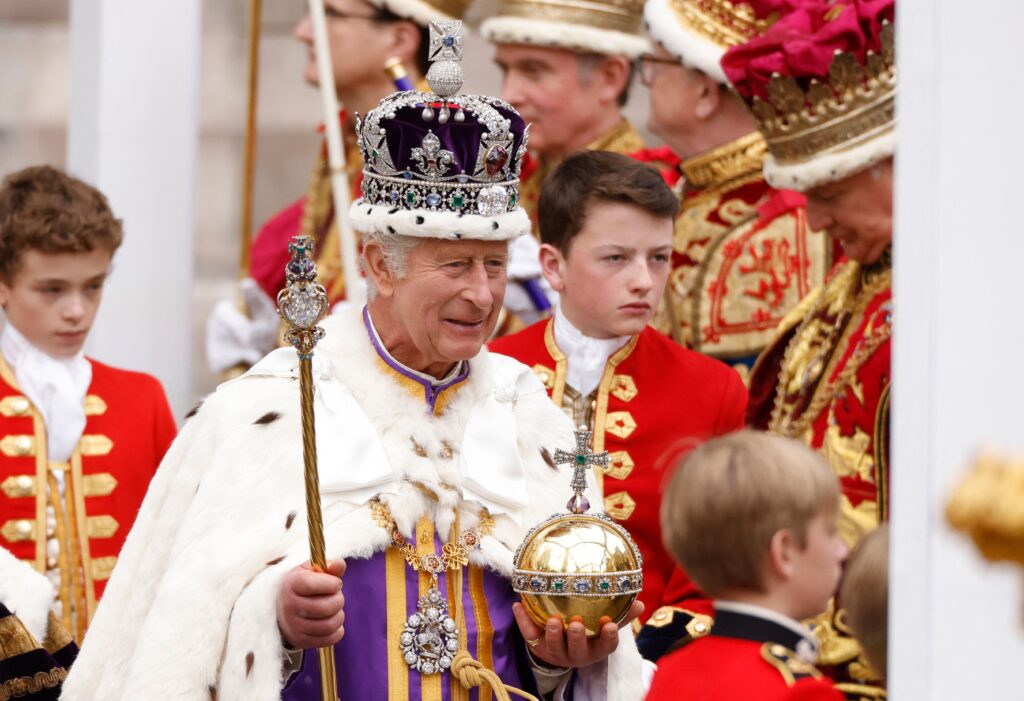
The monarch is the Head of State of the UK. The UK has a constitutional monarchy. This means that the king or queen does not rule the country but appoints the government, which the people have chosen in a democratic election. The monarch invites the leader of the party with the largest number of MPs, or the leader of a coalition between more than one party, to become the Prime Minister. The monarch has regular meetings with the Prime Minister and can advise, warn and encourage, but the decisions on government policies are made by the Prime Minister and Cabinet.
The monarch has important ceremonial roles, such as the opening of the new parliamentary session each year. On this occasion the King (or Queen) makes a speech which summarises the government's policies for the year ahead. All Acts of Parliament are made in His (or Her) Majesty's name.
The monarch represents the UK to the rest of the world, receiving foreign ambassadors and high commissioners, entertaining visiting heads of state, and making state visits overseas.
The monarch provides stability and continuity. While governments and Prime Ministers change regularly, the monarch continues as Head of State.
The National Anthem of the UK is 'God Save the King' (or Queen). It is played at important national occasions and at events attended by the monarch or the Royal Family. New citizens swear or affirm loyalty to the monarch as part of the citizenship ceremony.
The House of Commons
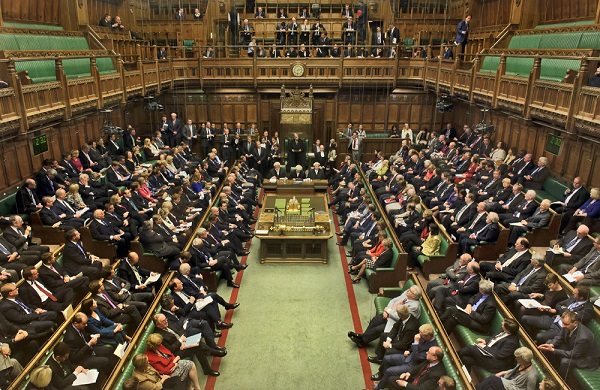
The House of Commons is regarded as the more important of the two chambers in Parliament because its members are democratically elected. The Prime Minister and almost all the members of the Cabinet are members of the House of Commons (MPs). Each MP represents a parliamentary constituency, which is a small area of the country. There are 650 constituencies in the UK. MPs have a number of different responsibilities:
- Represent everyone in their constituency
- Help to create new laws
- Scrutinise and comment on what the government is doing
- Debate important national issues
The House of Lords
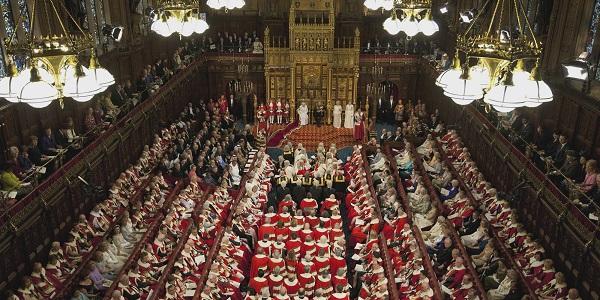
Members of the House of Lords, known as peers, are not elected by the people and do not represent a constituency. Until 1958, all peers were:
- 'Hereditary', which means they inherited their title, or
- Senior judges, or
- Bishops of the Church of England
Since 1958, the Prime Minister has had the power to nominate peers just for their own lifetime. These are called life peers. They have usually had an important career in politics, business, law or another profession. Life peers are appointed by the monarch on the advice of the Prime Minister.
Since 1999, hereditary peers have lost the automatic right to attend the House of Lords. They now elect a few of their number (92) to represent them in the House of Lords.
The House of Lords is normally more independent of the government than the House of Commons. It can suggest amendments or propose new laws. The House of Lords checks laws that have been passed by the House of Commons to ensure they are fit for purpose. The House of Commons has powers to overrule the House of Lords under the Parliament Acts of 1911 and 1949, but these are not used often.
The Speaker
Debates in the House of Commons are chaired by the Speaker. The Speaker is the chief Officer of the House of Commons. The Speaker is neutral and does not represent a political party, even though he or she is an MP, represents a constituency and deals with constituents' problems like any other MP. The Speaker is chosen by other MPs in a secret ballot.
The Speaker keeps order during political debates to make sure the rules are followed. This includes making sure the opposition has a guaranteed amount of time to debate issues which it chooses.
The Prime Minister and Cabinet
The Prime Minister (PM) is the leader of the political party in power. The PM appoints Cabinet ministers -- senior MPs who are responsible for running government departments. The Cabinet usually meets weekly to make important decisions about government policy.
Key Cabinet positions include:
- Chancellor of the Exchequer -- responsible for the economy
- Home Secretary -- responsible for crime, policing and immigration
- Foreign Secretary -- manages the UK's relationships with foreign countries
The leader of the opposition is the leader of the second-largest party in the House of Commons and challenges the government at Prime Minister's Questions (PMQs) every Wednesday.
The Judiciary
The judiciary is responsible for interpreting the law and ensuring that it is applied fairly. Judges are independent of the government. The most senior court in the UK is the Supreme Court of the United Kingdom, which was established in 2009, replacing the judicial functions of the House of Lords.
Elections
MPs are elected at a General Election, which is held at least every five years. If an MP dies or resigns, there will be a fresh election called a by-election in his or her constituency.
MPs are elected through a system called 'first past the post'. In each constituency, the candidate who gets the most votes is elected. The government is usually formed by the party that wins the majority of constituencies. If no party wins a majority, two parties may join together to form a coalition.
Devolved Administrations
Since 1997, some powers have been devolved from the central UK government to national bodies:
- The Scottish Parliament sits in Edinburgh and has 129 members (MSPs) elected by proportional representation. It has the power to pass laws on education, health, transport, the environment and some tax-varying powers.
- The Welsh Parliament (Senedd Cymru) meets in Cardiff and has 60 members (MSs). It makes decisions on education, health, the environment and transport in Wales.
- The Northern Ireland Assembly meets at Stormont in Belfast and has 90 members (MLAs). Power is shared between the nationalist and unionist communities, as established by the Good Friday Agreement in 1998.
England does not have its own parliament or assembly. Laws that apply only to England are decided by the UK Parliament at Westminster.
Contacting Elected Members
All elected members have a duty to serve and represent their constituents. You can contact MPs by letter or telephone at their constituency office, or at their office at the House of Commons, Westminster, London SW1A 0AA. Many MPs hold regular local 'surgeries' where constituents can go in person to talk about issues of concern.
Check that you understand
- What a constitution is and how the UK's constitution is different from those of most other countries
- The role of the monarch as Head of State
- The role of the House of Commons and House of Lords
- What the Speaker does
- The role of the Prime Minister and Cabinet
- How the UK elects MPs
- How devolved administrations work in Scotland, Wales and Northern Ireland
*This is a study guide for the Life in the UK test. Content is based on the official handbook topics.*
Test your knowledge of Chapter 5
Practice Chapter 5 (261 questions)The study guide content on this site is based on information from Life in the United Kingdom: A Guide for New Residents, 3rd edition, published by the Home Office. © Crown copyright. This is an independent study tool and is not affiliated with or endorsed by the Home Office or the official test provider. For the official handbook, visit officiallifeintheuk.co.uk.